



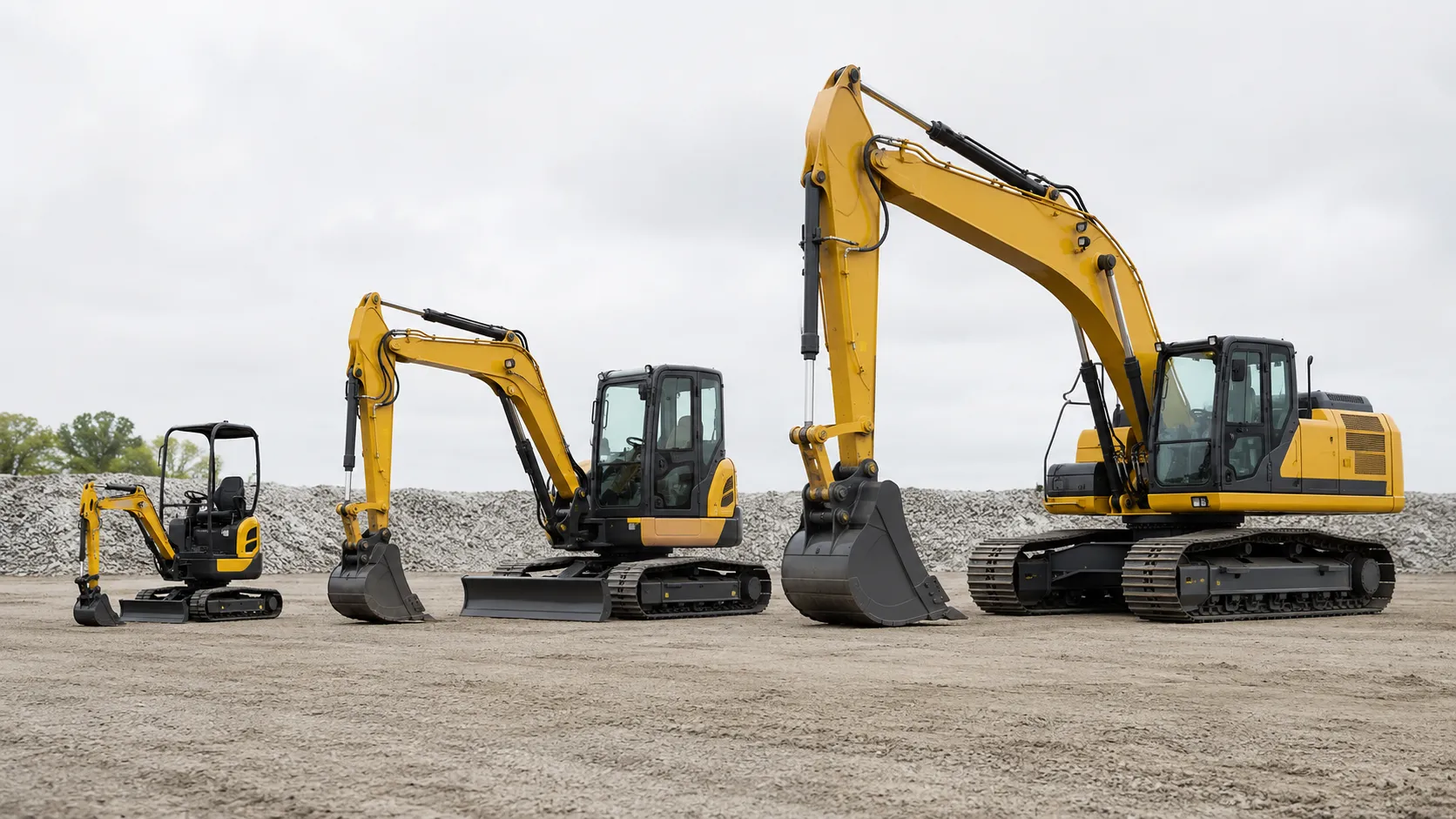
How many tonnes of excavator do you need?
Choosing the right weight class is one of the most important decisions when buying a new excavator. A machine that is too large costs more to transport and operate. A machine that is too small works slowly and may not handle the job safely.
Weight classes
Mini excavators (1-3.5 tonnes)
Ideal for:
- Home and yard projects
- Farm maintenance and irrigation
- Landscaping and gardening
- Utility work and installations
- Tight spaces and narrow access
Advantages: Easy transport, lower fuel use, simple storage, and practical operation for first-time owners.
For more detail, read Buying a new mini excavator for home, farm, or business use.
Compact and mid-size excavators (3.5-8 tonnes)
Ideal for:
- Small and medium construction work
- Foundations, trenches, and drainage
- Commercial landscaping
- Loading and site preparation
- Small demolition jobs
Advantages: More reach, stronger hydraulics, better stability, and higher productivity.
Standard excavators (8-20 tonnes)
Ideal for:
- Larger construction projects
- Road work and infrastructure
- Quarry, mining, and heavy digging
- Continuous professional use
Advantages: Maximum productivity, larger buckets, stronger lifting ability, and broader attachment options.
How to decide
Ask yourself these questions:
- Where will the machine work? Tight access usually points to a mini excavator.
- How deep do you dig? Deeper trenches and foundations need more reach.
- How much material do you move? Larger buckets save time on repeated work.
- How will you transport it? Trailer capacity and road access can limit the machine size.
- Who will operate it? Occasional users often benefit from a simple, compact setup.
Quick reference table
| Class | Weight | Typical buyer | Use case |
|---|---|---|---|
| Mini | 1-3.5t | Home, farm, small business | Landscaping, utilities, maintenance |
| Compact/mid | 3.5-8t | Contractors, farms, companies | Foundations, trenching, site work |
| Standard | 8-20t | Industrial and construction customers | Large projects, loading, heavy digging |
Before you choose
Once you know the approximate class, decide the attachment package and support needs. Read What to decide before buying a new excavator for a practical checklist.
Next steps
Browse our catalog to see available machines, or contact us for advice based on your work, transport, and budget.